 Blog
Stainless Steel vs Brass Valves – Which One to Choose?
Whether you’re sourcing valves for water, gas, chemicals, steam, or hydraulic systems, one of the most common questions buyers face is: “Should I choose…
Read More →
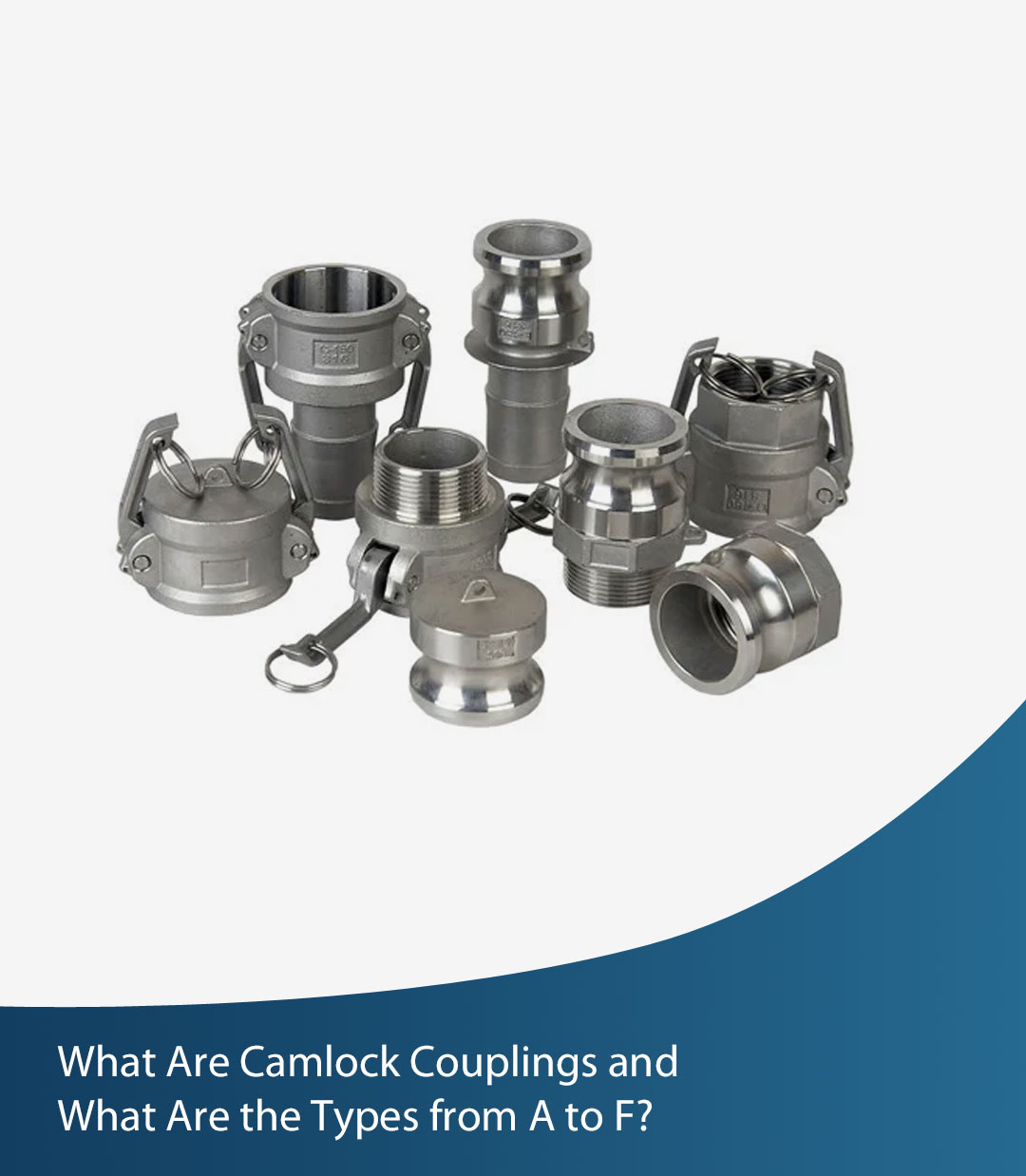
Camlock Couplings, also known as Cam and Groove Couplings, are standardized quick-connect fittings used for transferring fluids, powders, or gases. They are popular in industries like chemical, agriculture, food, petroleum, and construction, thanks to their tool-free, leak-proof, and reliable connection mechanism.
Camlock fittings are categorized into Types A to F based on their end connection and gender (male/female). Each type is used differently depending on the hose, pipe, or equipment configuration.
In this complete guide, you’ll learn:
Camlock couplings operate on a simple locking system:
There are no threads, tools, or torque needed.
This mechanism makes them:
| Type | Description | Male/Female | Use |
|---|---|---|---|
| Type A | Male adapter × Female NPT thread | Male | Connects to female threaded pipe |
| Type B | Female coupler × Male NPT thread | Female | Connects to male threaded pipe |
| Type C | Female coupler × Hose tail | Female | For hose-to-hose or equipment |
| Type D | Female coupler × Female NPT thread | Female | Connects to male threaded pipe |
| Type E | Male adapter × Hose tail | Male | Hose connection with female coupler |
| Type F | Male adapter × Male NPT thread | Male | Connects to female threaded pipe |
Let’s explore each one in detail.
🔧 Configuration:
🔍 Applications:
✅ Pros:
🧪 Material Options:
🔧 Configuration:
🔍 Applications:
✅ Pros:
🔧 Configuration:
🔍 Applications:
✅ Pros:
🧪 Popular Materials:
🔧 Configuration:
🔍 Applications:
✅ Pros:
🔧 Configuration:
🔍 Applications:
✅ Pros:
🔧 Configuration:
🔍 Applications:
✅ Pros:
| Material | Best Used For |
|---|---|
| Aluminum | Water, fuel, low-cost fluid systems |
| Stainless Steel (SS 304 / 316) | Corrosive chemicals, food, pharma |
| Brass | Fuel, oil, mild acids |
| Polypropylene | Agricultural chemicals, water |
| PTFE-Lined | High-purity or corrosive acid transfer |
Note: Always match gasket material (NBR, Viton, EPDM) to the media being handled.
| Size | Common Pressure Rating |
|---|---|
| 1/2” to 2” | 150–250 PSI |
| 3” to 4” | 75–150 PSI |
| 6” and above | 50–100 PSI (depends on material) |
Larger sizes reduce pressure rating. Polypropylene couplings also handle less PSI than metal ones.
| Industry | Common Camlock Types Used |
|---|---|
| Chemical Transfer | B, D, F (SS) |
| Fuel Dispensing | A, F, E (Aluminum, Brass) |
| Agriculture Spraying | C, E, B (Poly, Brass) |
| Food and Pharma | A, B, D (SS316, PTFE seals) |
| Tank Truck Connections | C, E, F (Aluminum, SS) |
| Water Supply/Drainage | A to E (Aluminum, Poly) |
Q1. What are the different types of Camlock fittings?
Types A, B, C, D, E, and F. Each has a different thread or hose connection.
Q2. What is a Type C Camlock?
It has a female cam arm side and a hose barb on the other end, ideal for connecting hoses to male adapters.
Q3. Can you mix Camlock sizes or types?
You must match the same size across types, but types A–F can be combined correctly (e.g., A to B, C to E, etc.)
Q4. Which Camlock is best for chemical use?
Stainless steel Camlocks with Viton seals are best for chemicals.
Q5. Are Camlocks reusable?
Yes. Camlocks are designed for frequent reuse with minimal maintenance.
Your selection depends on:
Always consult with a trusted industrial coupling supplier to avoid mismatches and media failure.
We stock and export:
✅ Custom threads (BSP, NPT) & gasket types
Blog Whether you’re sourcing valves for water, gas, chemicals, steam, or hydraulic systems, one of the most common questions buyers face is: “Should I choose…
Read More → Blog
In industries where corrosion is constant, failure is not an option. Pipelines, instruments, and fittings are exposed to aggressive chemicals, acids, seawater, gases, and…
Read More →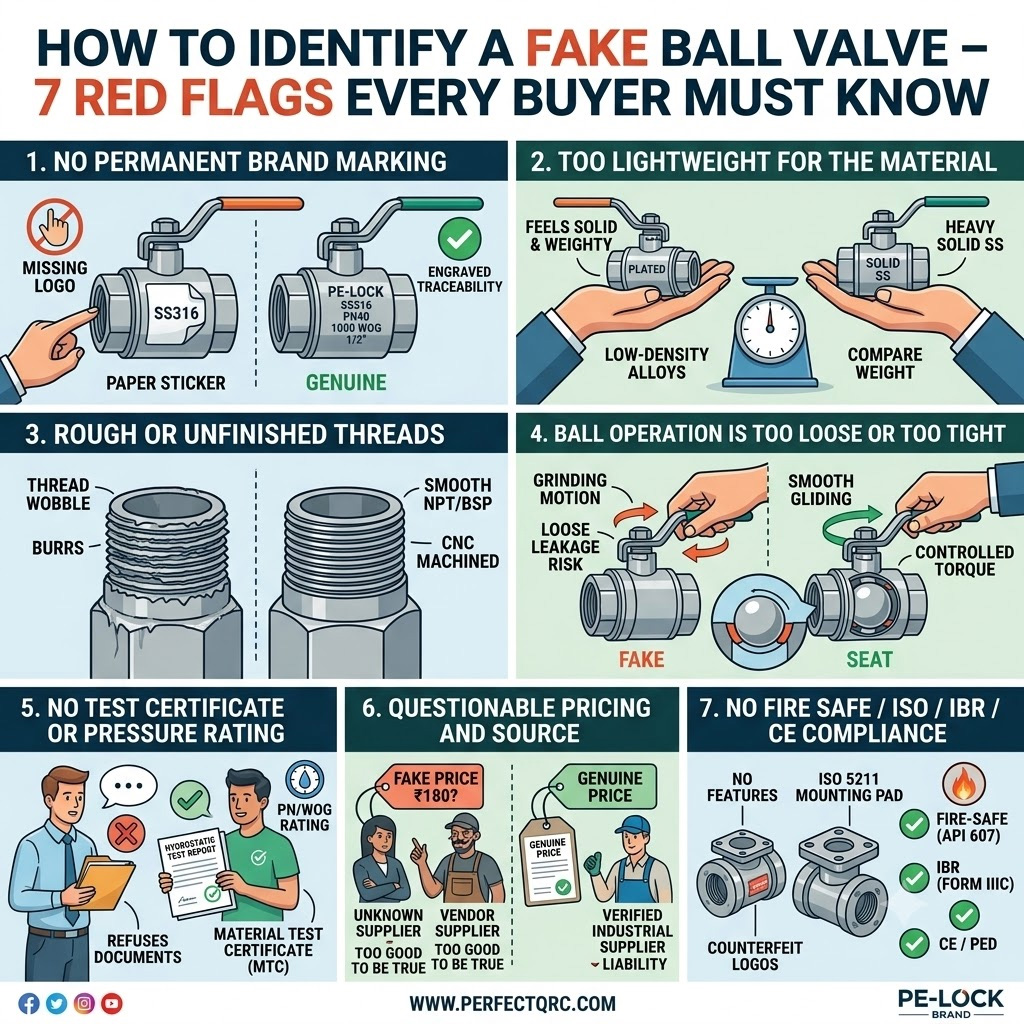 Blog
In today’s global industrial market, counterfeit ball valves have become a silent threat—especially in high-risk industries like oil & gas, chemicals, pharmaceuticals, and water…
Read More →