 Blog
Stainless Steel vs Brass Valves – Which One to Choose?
Whether you’re sourcing valves for water, gas, chemicals, steam, or hydraulic systems, one of the most common questions buyers face is: “Should I choose…
Read More →

Quick Release Couplings (QRCs) are essential components in modern industrial systems where fluid lines—whether liquid or gas—need to be connected or disconnected quickly and safely without tools. But not all QRCs are created equal. One of the most common confusions among industrial buyers, OEMs, engineers, and project managers is:
“What’s the difference between Hydraulic and Pneumatic QRCs, and which one should I use?”
This guide provides a complete, 2000+ word breakdown, with technical comparisons, use-case insights, buyer selection tips, and voice-search FAQs.
Quick Release Couplings (also called Quick Disconnects or Quick Connect Couplers) are devices that allow instant connection and disconnection of hoses or pipelines without the use of tools. They’re commonly used in:
The core goal is leak-free, efficient, and safe media transfer with minimum downtime.
Using the wrong QRC type can lead to:
👉 A hydraulic QRC used in a low-pressure air system is overkill.
👉 A pneumatic QRC used in a hydraulic circuit is a safety hazard.
A Hydraulic QRC is designed to handle high-pressure liquid media, especially oils, lubricants, and hydraulic fluids. It is engineered for systems where fluid integrity, zero leakage, and safety are critical.
🔍 Key Features:
🏭 Common Applications:
A Pneumatic QRC is built for low-pressure air or gas systems and is designed for fast and lightweight disconnection in compressed air lines.
🔍 Key Features:
🏭 Common Applications:
| Feature | Hydraulic QRC | Pneumatic QRC |
|---|---|---|
| Media Type | Hydraulic oil, fuel, fluid | Compressed air, inert gas |
| Working Pressure | 1,000–15,000 PSI | 30–200 PSI |
| Material | SS 304/316, Carbon Steel, Brass | Brass, Aluminum, Plastic |
| Valve System | Double shut-off / Flat face | Single shut-off / Straight-through |
| Seal Type | Viton, NBR, FKM | NBR, EPDM |
| Contamination Protection | Dust caps, Flat Face design | Basic seals only |
| Use Frequency | Moderate to low | High and frequent |
| Cost Range | Higher | Economical |
| Connection Method | Pull sleeve or threaded | Push & click |
| Leak Resistance | Leak-proof under pressure | May release air on disconnect |
🛠️ Pressure Tolerance:
🧪 Seal Mechanism:
🧲 Connection Style:
⚠️ Safety:
| Industry | Hydraulic QRC | Pneumatic QRC |
|---|---|---|
| Earthmoving | ✅ | ❌ |
| Textile | ❌ | ✅ |
| Pharma | ✅ (fluid lines) | ✅ (gas lines) |
| Automotive | ✅ (brakes, lifts) | ✅ (air tools) |
| Power Plants | ✅ | ❌ |
| Garages | ❌ | ✅ |
| Offshore Drilling | ✅ | ❌ |
| Factory Automation | ❌ | ✅ |
| Criteria | Choose Hydraulic QRC | Choose Pneumatic QRC |
|---|---|---|
| Media is oil, fluid, fuel | ✅ | ❌ |
| Media is air, inert gas | ❌ | ✅ |
| Pressure > 1000 PSI | ✅ | ❌ |
| Frequent connect/disconnect | ❌ | ✅ |
| Clean disconnection with no spill | ✅ | ❌ |
| Used in tool shop or automation | ❌ | ✅ |
| Used in roadwork or hydraulic lift | ✅ | ❌ |
| Parameter | Hydraulic QRC | Pneumatic QRC |
|---|---|---|
| Unit Cost | ₹800 – ₹5,000 | ₹150 – ₹800 |
| Average Life (with maintenance) | 3–5 years | 6–18 months |
| Maintenance Needs | Periodic seal/oil check | Occasional cleaning |
| Replacement Ease | Medium | Very easy |
| Reusability | High | High |
Q1. Can I use a pneumatic QRC in a hydraulic system?
No. It can fail due to low pressure rating and improper seals.
Q2. What is the max pressure for pneumatic quick couplings?
Typically up to 200 PSI. Some special types may go slightly higher.
Q3. Which QRC is more expensive?
Hydraulic QRCs cost more due to higher material strength and precision sealing.
Q4. Are all QRCs double shut-off?
No. Only hydraulic types typically use double shut-off. Pneumatic ones often use single shut-off or open flow.
Q5. What’s the difference in materials?
Hydraulic QRCs are made from stainless steel or carbon steel; pneumatic ones are made from brass, plastic, or aluminum.
🔹 Choose a Hydraulic Quick Coupling if:
🔸 Choose a Pneumatic Quick Coupling if:
Ready to Choose the Right QRC?
Whether you’re buying for:
We help engineers, project heads, and procurement teams get the right QRC every time.
📩 Request a Quote | 📞 Talk to an Engineer | 📥 Download Full Catalog PDF
Blog Whether you’re sourcing valves for water, gas, chemicals, steam, or hydraulic systems, one of the most common questions buyers face is: “Should I choose…
Read More → Blog
In industries where corrosion is constant, failure is not an option. Pipelines, instruments, and fittings are exposed to aggressive chemicals, acids, seawater, gases, and…
Read More →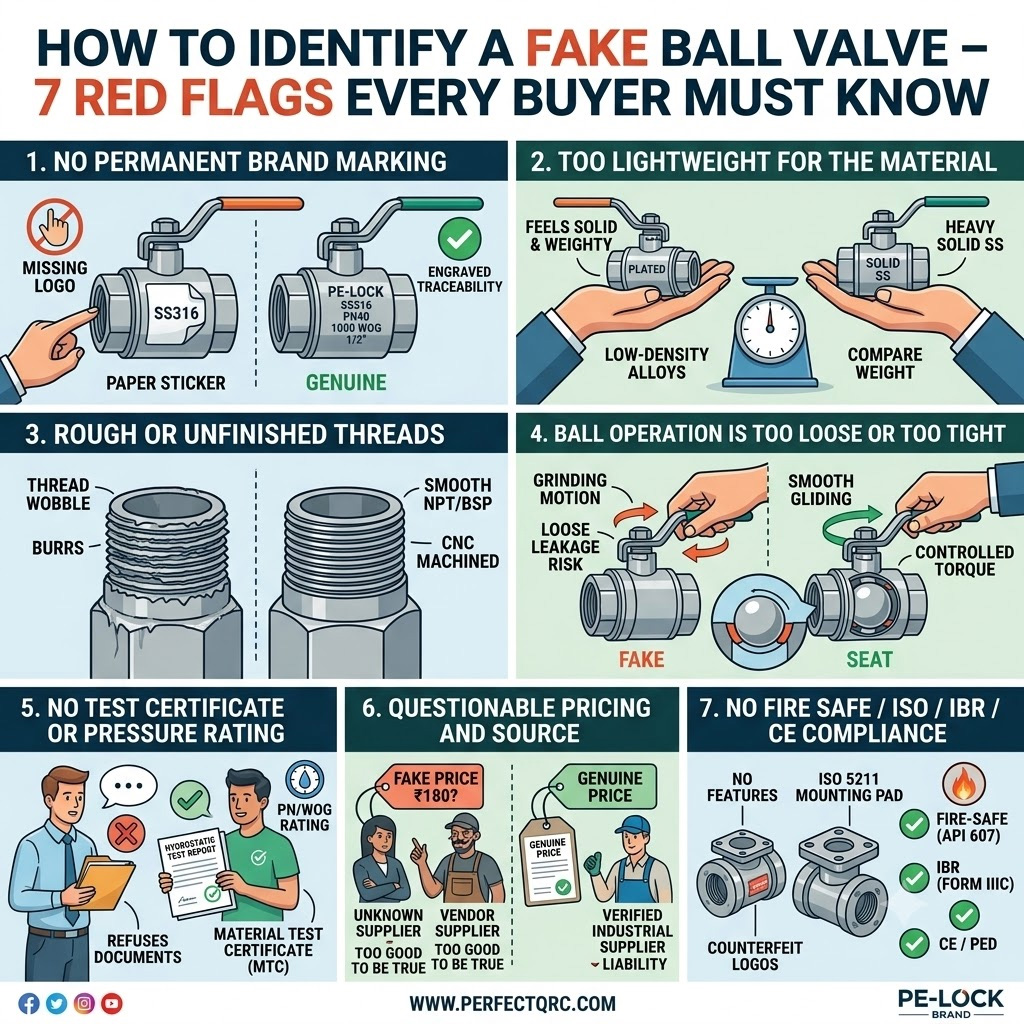 Blog
In today’s global industrial market, counterfeit ball valves have become a silent threat—especially in high-risk industries like oil & gas, chemicals, pharmaceuticals, and water…
Read More →